Adelaide's business leaders are staring down a harder second half of 2026. The global economic picture has darkened considerably-major trading partners are cutting growth forecasts, inflation remains sticky in key markets, and the likelihood of rate cuts has been pushed further into the distance. For local companies, especially those with overseas exposure or tight cash flow, the implications are immediate and unavoidable.
This matters now because Adelaide's economy has spent the last three years betting on export strength and domestic consumer resilience. Manufacturing exports through the Port Adelaide precinct, Adelaide Hills wine production, and professional services pitched to Asian markets all rely on external conditions holding steady. They aren't. The European Union's second-quarter GDP growth came in at 0.2 percent last month, while Chinese industrial output growth has slowed to levels not seen since 2020. Neither trend is reversing anytime soon.
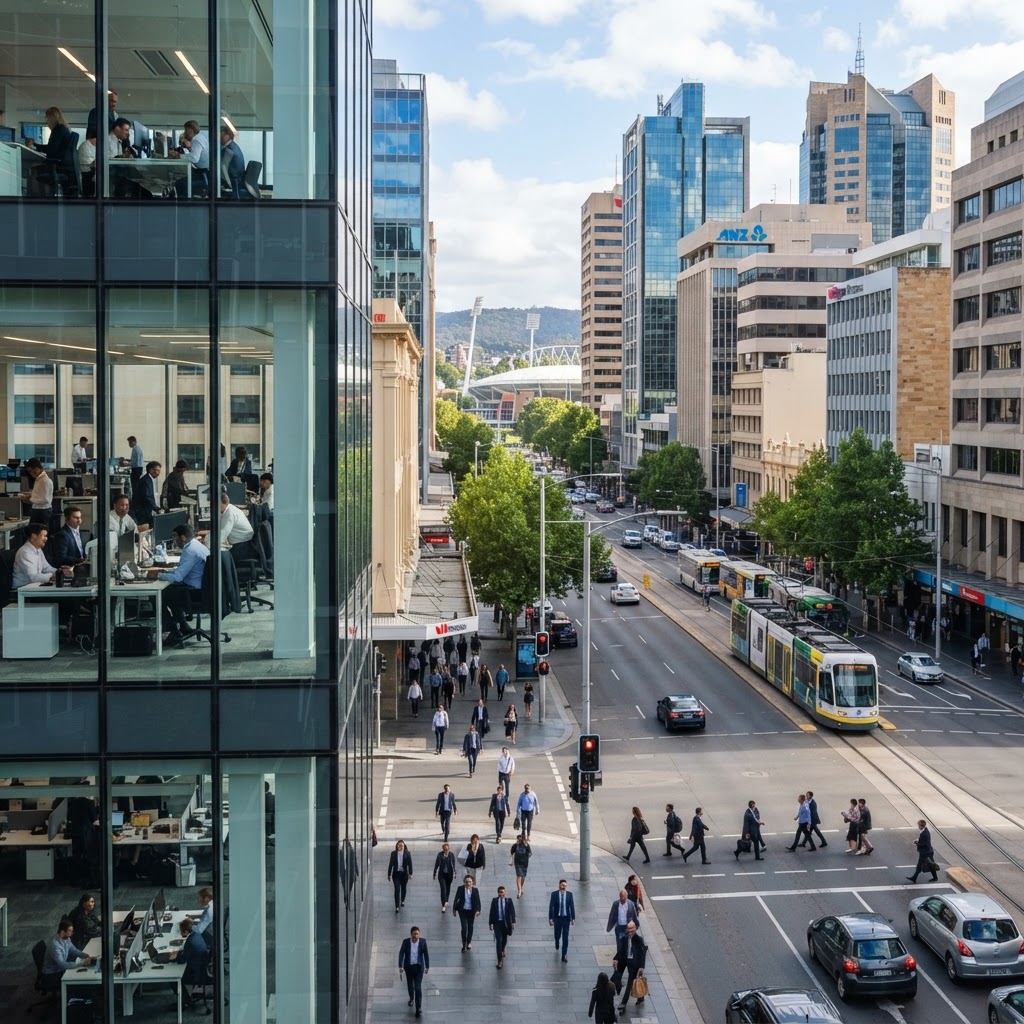
Walk down Rundle Mall on any given Thursday and you'll see the pressure building. Retail foot traffic is down 8.3 percent year-on-year according to preliminary data from the Adelaide CBD Precinct Association, which tracks movement through the city's main shopping strip. Simultaneously, the South Australian Chamber of Commerce and Industry reported in June that business confidence among members hit a three-year low, with 62 percent citing "external economic conditions" as their primary concern.
The Export and Interest Rate Crunch
Adelaide's wine exporters have been hit hardest. The Barossa Valley and McLaren Vale regions together shipped $1.2 billion in bottled wine overseas last financial year, but orders for the current year are running roughly 14 percent behind the same period twelve months ago. Higher freight costs, currency fluctuations, and weaker demand from key markets in North America and Asia have compressed margins across the board. One medium-sized operator in Tanunda told colleagues recently that unless conditions improve by September, the company would need to cut seasonal staff numbers.
Interest rates compound the problem. The Reserve Bank's cash rate sits at 4.35 percent-where it's been since May-and market pricing suggests no meaningful reduction before the final quarter of 2026 at the earliest. For Adelaide businesses carrying debt to fund equipment, vehicles, or inventory, the higher-for-longer scenario drains cash reserves month after month. Commercial lending conditions have tightened as well. Banks are demanding stronger equity positions before releasing funds, and approval timelines have stretched from six weeks to ten weeks or more.
The property sector in Adelaide's eastern suburbs-traditionally a bellwether for local investor confidence-is flashing warning signs. Median asking prices on properties in Burnside and Norwood have drifted sideways for three consecutive quarters rather than climbing as they did through 2024 and early 2025. That's not a crash, but it's a meaningful shift in momentum that affects both commercial landlords and business owners seeking to refinance.
What Comes Next
For Adelaide business owners, the practical takeaway is straightforward: stress-test your cash position now, not when the problem arrives at your door. Boards are already doing this. The Adelaide Chamber's latest survey shows that 71 percent of respondents have either completed or are actively conducting sensitivity analysis on their operations under different economic scenarios.
Companies with debt maturing in the next eighteen months should investigate refinancing options before spreads widen further. Those with exposure to international markets should revisit pricing strategies and hedging approaches. And employers considering hiring should budget conservatively-customer demand will remain volatile until at least late 2026.
The silver lining, if there is one: Adelaide's economy has weathered global slowdowns before, and the city's relatively low cost base compared to Sydney and Melbourne still attracts offshore investment and new business formation. But that advantage only holds if local operators stay disciplined during the choppy months ahead.
About this article●Beta
Published by The Daily Adelaide
Covering business in Adelaide. This article was generated by AI, under human editorial accountability and risk-based review and our reasonable editorial care. Sensitive material is held for human review before publication. See our reasonable editorial care.
Beta: AI-assisted and human-overseen. Details may be imperfect, so please verify anything important.