Business
Adelaide’s Employment Market Faces Steep Challenges Amid Economic Uncertainty
Stagnant job growth and rising living costs are putting pressure on workers and employers across South Australia this year.
3 min read
Updated 13 h ago
Business
Stagnant job growth and rising living costs are putting pressure on workers and employers across South Australia this year.
3 min read
Updated 13 h ago

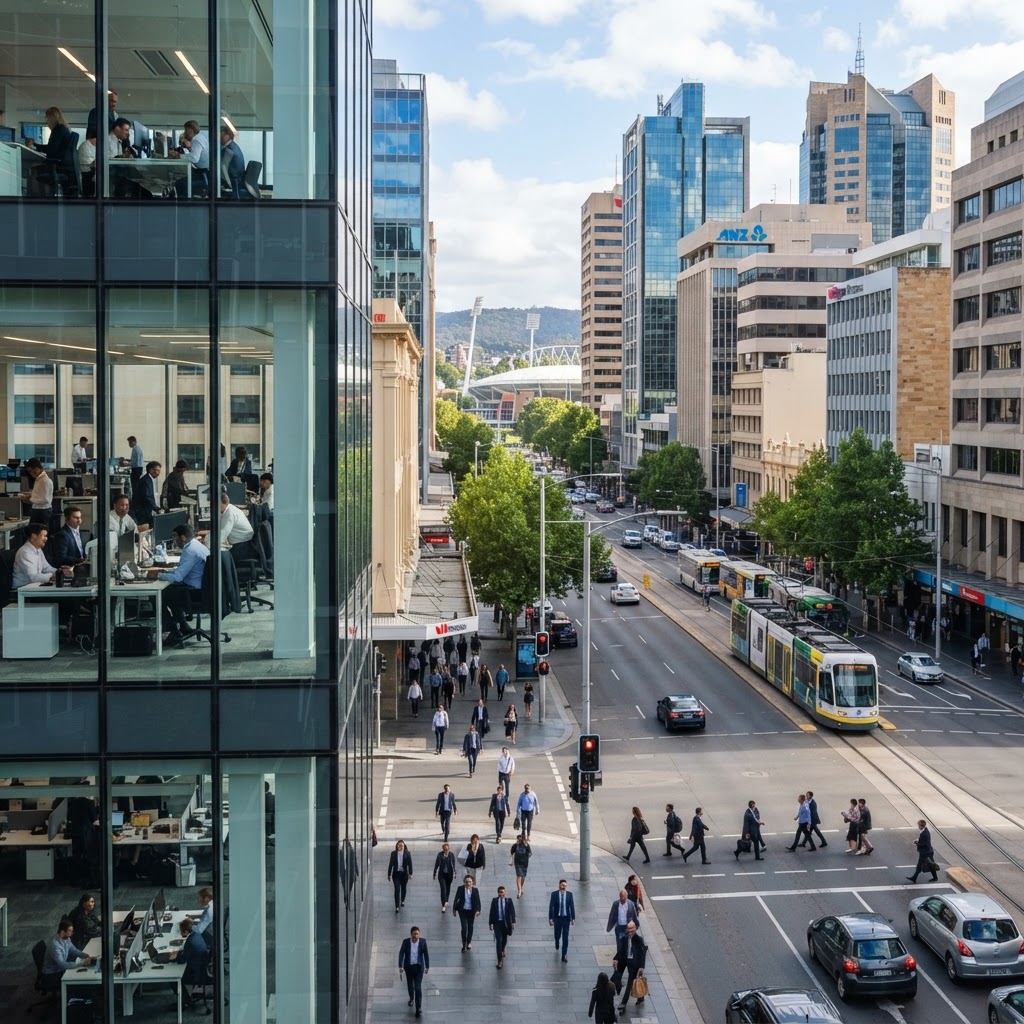
Adelaide's employment market is grappling with significant headwinds in 2026, as job creation slows and workers face rising cost-of-living pressures. The latest local data shows job vacancies have dipped for the first time in over a year, signalling a troubling shift for both employees and businesses in the city.
This slowdown matters as Adelaide relies heavily on steady employment growth to sustain its expanding population and robust sectors like manufacturing, healthcare, and technology. After years of hiring surges supported by government stimulus and infrastructure projects, the city now confronts tightening economic conditions linked to inflation and global market disruptions.
South Australia’s unemployment rate edged slightly higher to 4.7% in June, compared with 4.3% at the end of 2025, according to figures released by the Australian Bureau of Statistics. This rise reflects a broader shift as companies in precincts like the Adelaide CBD and Mile End cautiously pause recruitment due to supply chain uncertainties and rising operational costs.
Local employers in technology hubs such as Lot Fourteen are scaling back hiring amid funding constraints, while health services around the Adelaide Health and Medical Sciences precinct on Frome Street report persistent staffing shortages but difficulty onboarding new talent. The contrast underscores a fragmented market where some sectors are squeezed, while others struggle to fill vacancies.
A survey conducted last month by the South Australian Chamber of Commerce and Industry found that 57% of businesses in the metropolitan area reported recruitment challenges, a notable increase from 41% in early 2026. The average salary expectation for mid-level roles in Adelaide rose by 5% in six months, pushing wages above $80,000 for many professional positions.
Meanwhile, rental prices around eastern suburbs like Norwood climbed 7% year-on-year, outpacing wage growth and straining household budgets. This financial squeeze reduces disposable income, affecting consumer spending that supports local businesses and job creation.
The City of Adelaide’s targeted employment support programs, including the Skills Development Fund, are expanding their outreach to assist young people and displaced workers, but challenges remain. Local NGO Working Street, based on King William Street, reports increased demand for career counselling as workers seek retraining opportunities amid uncertain job prospects.
Economists warn that Adelaide’s employment market may continue to face pressure through the second half of 2026 as inflationary effects linger and global trade tensions affect export-dependent industries like automotive and wine production.
Job seekers should consider upskilling in growing areas such as digital technology and renewable energy, with institutions like TAFE SA and the University of South Australia offering expanded short courses tailored to these fields. Employers are advised to review retention strategies and consider flexible work arrangements to attract scarce talent.
For now, Adelaide’s workers and businesses navigate a complex environment where economic headwinds risk slowing the city’s recent employment momentum, demanding adaptability and resilience across sectors.
Business

Business

Business

Business
Business

Business
About this articleBeta
Published by The Daily Adelaide
Spread the word
Daily brief
Free, in your inbox before 7am. Weekdays.
The Daily Network — local news across Australia