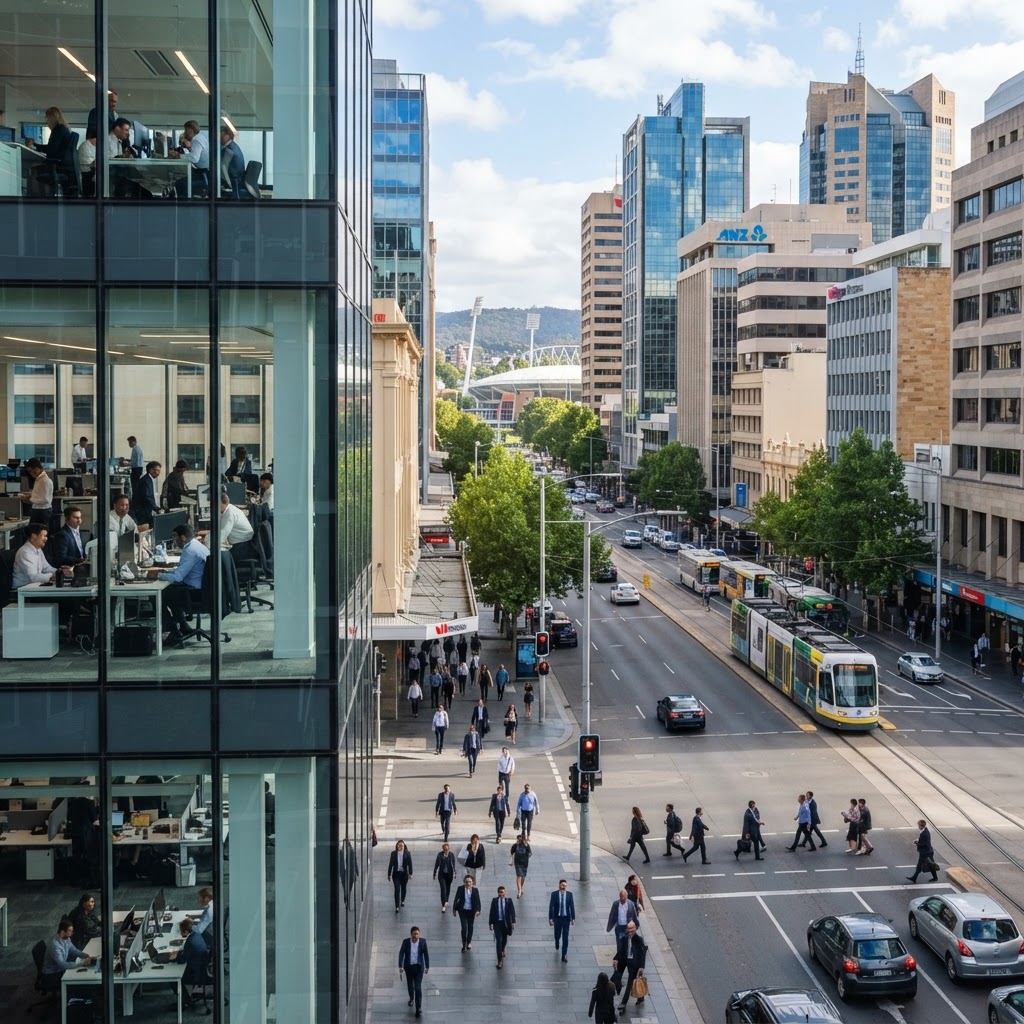
Adelaide is experiencing a cautious but steady influx of investment, reflected in recent economic indicators that signal both challenges and opportunities for the local market this quarter.
The relevance of these indicators has heightened as businesses and investors reevaluate their strategies amid shifting global conditions, inflation concerns, and Australia's evolving monetary policy. For Adelaide, a city known for its diverse economy, this moment is critical in recalibrating growth expectations and resource allocation.
Local Investment Activity and Economic Trends
Within the city’s commercial heart, Wakefield Street continues to attract new venture capital interest, particularly linked to tech startups housed in the newly developed City-Vine precinct. The Adelaide Innovation Hub, located nearby on Franklin Street, has reported a 12 percent increase in funding applications compared to the previous quarter, highlighting growing confidence among entrepreneurs despite wider market uncertainties.
Residential property investment patterns also offer a telling local story. The western suburbs, especially areas around Henley Beach Road, have seen a 4.5 percent rise in both property sales and renovation permits over the last six months according to the City of Charles Sturt council, signaling renewed buyer appetite amid recent price adjustments.
The Numbers Behind the Market Sentiment
Data released by the South Australian Centre for Economic Studies (SACES) shows Adelaide’s unemployment rate holding steady at 4.2 percent as of June 2026, slightly below the national average. Meanwhile, consumer price inflation in Adelaide is tracking at 3.1 percent year-on-year, up from 2.7 percent in March but moderated compared to other capitals.
Regarding capital flows, the South Australian Investment Corporation's latest quarterly report notes a 7 percent increase in foreign direct investment, primarily directed towards renewable energy projects and agritech ventures headquartered near the Tonsley Innovation District. These sectors underpin the state government’s growth agenda and reflect a pivot towards sustainable industries.
However, commercial real estate vacancy rates downtown remain elevated at 12.4 percent, underscoring ongoing tenant hesitations amid global economic jitters and a cautious leasing environment.
Looking ahead, businesses and investors may find value in engaging with programs like the Adelaide Business Growth Fund, which recently expanded its eligibility criteria to support mid-sized enterprises in adapting to market volatility. Additionally, the state government's planned release of updated infrastructure plans this September will be a key development to watch.
For those considering market participation, monitoring developments around key economic indicators such as employment trends, inflation rates, and sector-specific investment flows will be essential. Staying informed about local initiatives, like the City of Adelaide’s active push for smart city innovation along North Terrace, could also present opportunities to leverage emerging market conditions effectively.
About this article●Beta
Published by The Daily Adelaide
Covering business in Adelaide. This article was generated by AI, under human editorial accountability and risk-based review and our reasonable editorial care. Sensitive material is held for human review before publication. See our reasonable editorial care.
Beta: AI-assisted and human-overseen. Details may be imperfect, so please verify anything important.