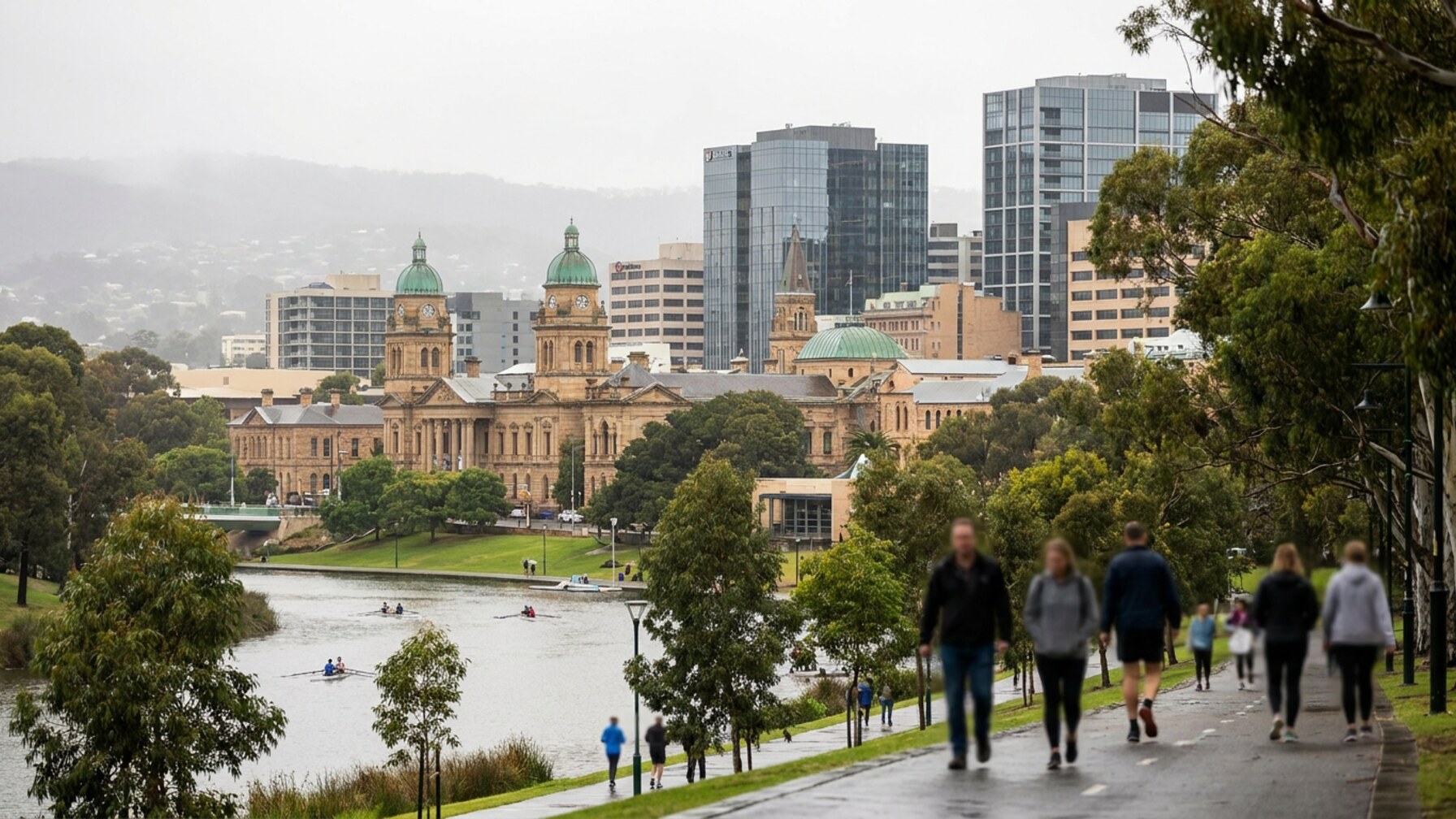
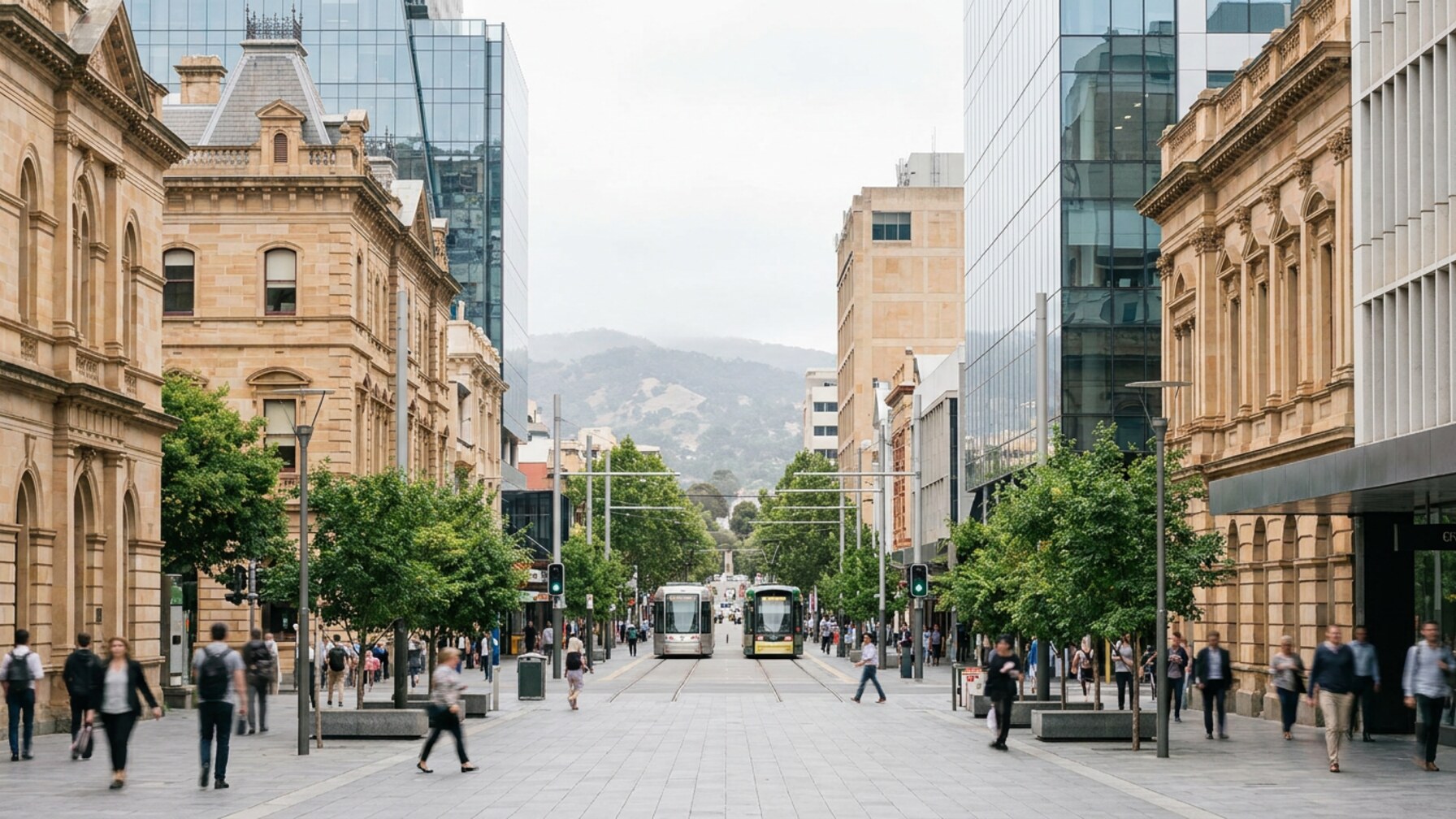
Adelaide's economy is firing on cylinders most Australian cities can only envy. The AUKUS submarine program has locked in defence manufacturing contracts worth billions. Hydrogen export deals are being finalised. Yet drive past the boarded shopfronts on Rundle Mall, and you'll see a city wrestling with the familiar problem: uneven growth that leaves some neighbourhoods flush while others struggle.
The tension matters now because Adelaide is at a crossroads shared by other post-industrial cities globally. Glasgow has pivoted to tech and life sciences. Pittsburgh reinvented itself around robotics and software. The question for Adelaide isn't whether new industries can arrive-they're already here. The question is whether the city's existing workforce and communities will actually benefit.
Defence and advanced manufacturing are reshaping Adelaide's economic narrative. BAE Systems, Rolls-Royce, and ASC are expanding headcount. Lot Fourteen, the state government's 32-hectare innovation precinct in Thebarton, now hosts 4,500 workers across space, defence, and digital sectors. The facility opened in 2018 and has become the physical embodiment of the city's pivot toward high-value industries. Meanwhile, the Olympic Dam uranium expansion near Roxby Downs is projected to inject $20 billion into the South Australian economy over its project life.
The immediate problem is familiar to cities undergoing similar transitions. A mechanical engineer earning $95,000 annually at an aerospace facility on Klemm Road in Lonsdale can afford a family home in Prospect or Clarence Park. A retail worker on $52,000 cannot. Adelaide's median house price has climbed to $680,000 as of mid-2026, up from $520,000 three years prior. That acceleration outpaces wage growth in hospitality, retail, and aged care-the sectors still employing the largest cohorts of South Australian workers.
The Geography of Opportunity
Lot Fourteen sits roughly 3 kilometres north of the CBD. Workers there have access to climbing salaries and career pathways. Rundle Street East, two kilometres south, tells a different story. The retail precinct that once anchored inner-city life has contracted sharply. Vacancy rates on the strip exceed 22 percent, according to property agents surveying the laneway. The Coffee Academy on Rundle Street closed in April. Indie bookstore Black&White closed in May. The same pattern played out in Glasgow's city centre between 2015 and 2020, before that city invested heavily in cultural programming and venue subsidies to revitalise the downtown core.
Adelaide's government has pledged $500 million to hydrogen energy development and is backing infrastructure projects. But critics point out that most hydrogen jobs-manufacturing, logistics, export handling-will concentrate in port areas and industrial zones, not the suburbs where unemployment rates run highest. The northern suburbs of Elizabeth, Salisbury, and Playford have unemployment rates around 8 percent, nearly double the city average of 4.2 percent. That gap hasn't narrowed materially despite three years of defence industry expansion.
What Numbers Tell Us
Adelaide's population growth rate stands at 1.8 percent annually, driven partly by interstate migration. That's healthy. But the composition matters. Young professionals aged 25 to 34 with tertiary qualifications are moving in faster than older workers or those without degrees. The ABS recorded a net inflow of 15,400 interstate migrants to South Australia in 2025, the highest in a decade. They're gravitating toward roles in Lot Fourteen, defence manufacturing, or tech startups clustered around North Terrace.
The city faces a closing window to manage that transition equitably. Pittsburgh took 15 years and committed $2 billion in urban renewal funding to move past its decline. Glasgow is still in the process, 20 years on. Adelaide has maybe five years to prove the hydrogen and defence booms can create pathways for workers without advanced degrees. Retraining programs at TAFE SA are expanding, but funding remains constrained relative to demand.
What happens next will determine whether Adelaide becomes a genuinely inclusive growth story or another city where new prosperity widens existing gaps. The AUKUS contracts aren't going anywhere. Neither are the workers in Elizabeth waiting for their chance.