News
Adelaide's summer of tough calls: What happens next on submarines, safety and the city's future
The state faces critical decisions on AUKUS timing, emergency protocols and housing pressure as migration transforms the landscape.
4 min read
News
The state faces critical decisions on AUKUS timing, emergency protocols and housing pressure as migration transforms the landscape.
4 min read
Adelaide stands at a crossroads. Over the next six months, a series of decisions will reshape how this city operates-from how fast the federal government moves on submarine construction to whether state authorities tighten protocols after a weekend death in an SA home raised fresh questions about emergency response times.
The AUKUS submarine program has dominated state government messaging since Labor took office, with Premier Peter Malinauskas positioning South Australian defence manufacturing as the economic anchor for the next decade. But timing remains murky. The original Tomtomorrow timeline suggested construction could begin by 2028. Federal Defence officials have signalled delays to 2030 or beyond. What happens next depends on decisions being made in Canberra right now, and Adelaide's hydrogen jobs rollout-designed to create 20,000 positions over five years-hangs partly on clarity about submarine-related work.
The hydrogen economy remains theoretical. Real jobs numbers won't arrive until private companies commit capital. The state's $500 million hydrogen commitment via the Hydrogen Jobs Plan is meaningful, but construction and manufacturing demand depends on decisions from multinational defence contractors about where they'll site production facilities. Whyalla's heavy industry capacity and Port Adelaide's logistics infrastructure make South Australia competitive, but so do Victoria's existing clusters and New South Wales' proximity to federal decision-makers.
Emergency response procedures face urgent review following the death of a man pulled unconscious from a residential property in Adelaide's inner suburbs on Saturday. Police and paramedics attended, but neighbours questioned why emergency response timing didn't prevent the fatal outcome. The South Australian Ambulance Service and SA Police have declined to detail response times, citing operational sensitivity, but the incident has prompted the Glenelg electorate office to request briefings on gas safety protocols and emergency dispatch procedures.
What happens next here is clearer: the Office for Safety and Emergency Management will conduct a standard post-incident review. South Australia's gas safety standards haven't been substantially updated since 2019. Origin Energy, the state's dominant gas supplier, must decide whether to fund additional public safety campaigns or push for updated building codes requiring carbon monoxide detectors in rental properties. Currently, only alarm systems for smoke are mandated under the South Australian Building Code. A decision on mandatory CO detectors could come within weeks.
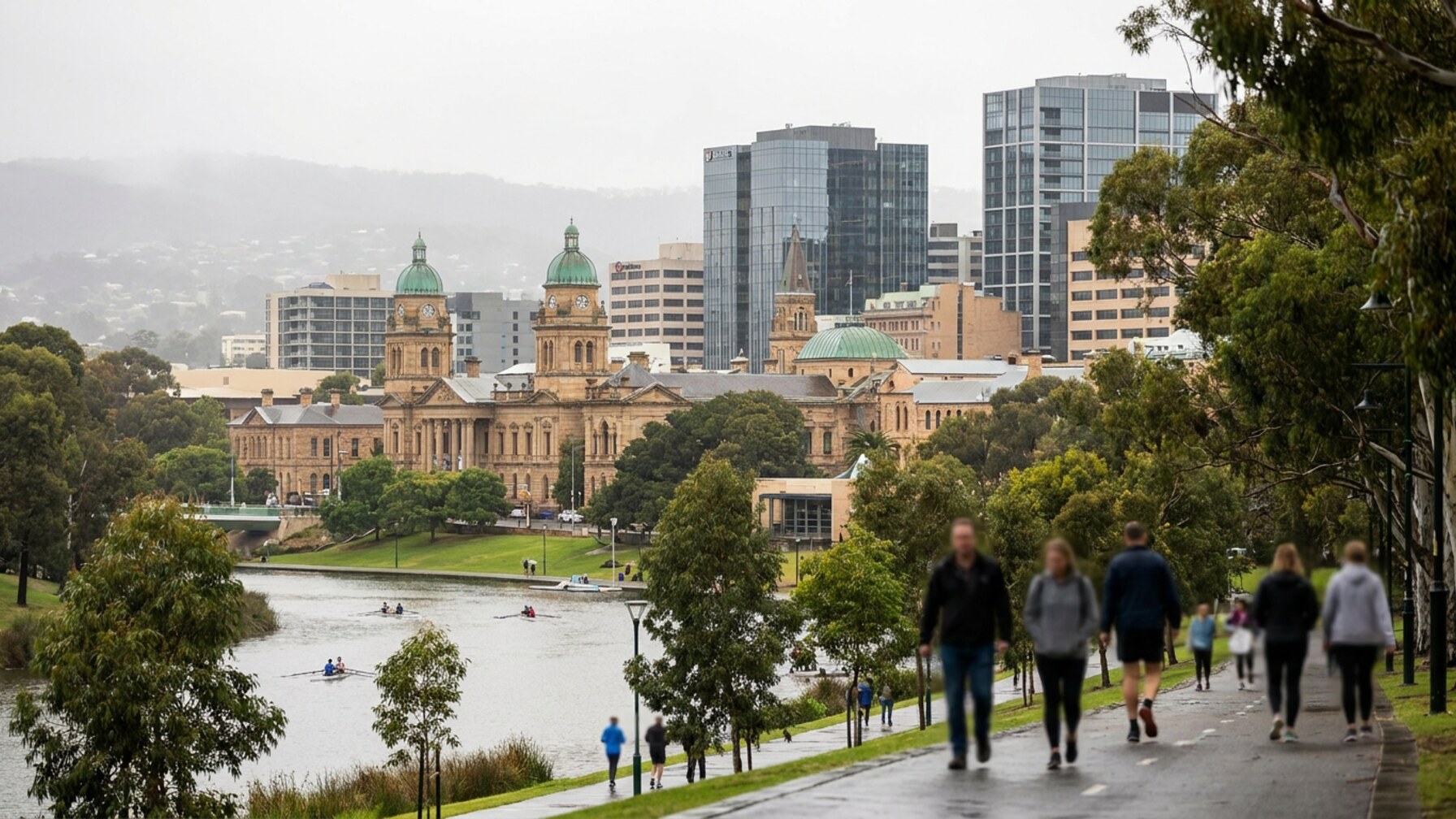
Interstate migration continues reshaping Adelaide's property market and infrastructure planning. Population projections released by the state planning authority in March 2026 show net interstate migration added 18,400 people to South Australia in 2025-the highest single-year inflow since records began in 2011. More arrivals mean pressure on hospital wait times, school capacity in outer suburbs like Lightswood, and competition for rental properties. The Adelaide median house price climbed 8.3 percent year-on-year to $785,000 in June, outpacing wage growth.
The state government has committed to 60,000 new homes by 2040, but construction starts have averaged only 3,200 annually since 2023. Developers are awaiting planning certainty on The Lot Fourteen tech precinct expansion and South Road upgrades before committing to major residential projects around the Bowden and Hackney renewal zones. Treasury estimates show each percentage point of additional population growth requires $2.1 billion in infrastructure investment over ten years.
Key decisions pending: Planning approval timelines for medium-density housing near public transport corridors (Unley Road, Port Road, Payneham Road). Whether the state will fast-track land release on North Adelaide council-owned sites. When the Olympic Dam uranium expansion gets federal environmental sign-off-a decision now expected in late 2026 or early 2027, which will determine BHP's capital spending and hiring through 2030.
Adelaide's economy is moving. The question now is whether state and federal decision-makers can align on timing and investment priorities fast enough to capture the jobs growth rather than watch it drift to competitors interstate.
News

News
News
News
News
News
About this articleBeta
Published by The Daily Adelaide
Spread the word
Daily brief
Free, in your inbox before 7am. Weekdays.
The Daily Network — local news across Australia