Reading Adelaide's Economic Pulse: What Job Market Signals Tell Us About Investment Flows
As global uncertainty swells, local employment data and capital movements offer a clearer picture of where Adelaide's economy is heading.
As global uncertainty swells, local employment data and capital movements offer a clearer picture of where Adelaide's economy is heading.
Adelaide's job market is sending mixed signals that deserve closer attention from anyone invested in the city's economic trajectory. With unemployment hovering near 3.8 per cent in South Australia—marginally above the national average—the tightness in labour supply remains a defining feature of our local economy, even as global investment patterns shift.
The relationship between employment trends and capital flows is rarely straightforward, but it matters deeply. When businesses expand payrolls, they signal confidence in future growth. Conversely, when investment capital starts flowing elsewhere, hiring often follows suit. Right now, Adelaide is experiencing both simultaneously in different sectors.
Construction and infrastructure remain buoyant. The Riverbank Precinct's continued development, coupled with ongoing work on inner-city precincts around King William Road and Frome Street, has kept tradies and project managers in steady demand. But these jobs are finite—the question is what comes next. Real estate valuations in traditionally strong suburbs like Unley and Malvern have remained relatively stable, suggesting investors aren't fleeing, but they're not rushing in either.
Manufacturing and advanced manufacturing tell a different story. Investment in defence-adjacent industries along the Port Adelaide corridor has attracted both public and private capital, creating pockets of skilled employment growth. Yet broader manufacturing sectors—everything from food processing to automotive components—continue experiencing structural headwinds. Wages growth remains subdued at 2.1 per cent annually across South Australia, below inflation for many workers.
Technology and professional services represent the real battlefield for capital right now. Adelaide's emerging startup ecosystem, concentrated in areas like the Bowden precinct and around the University of Adelaide, has attracted venture capital, but nothing remotely comparable to Sydney or Melbourne. That's a constraint on job creation at higher wage levels.
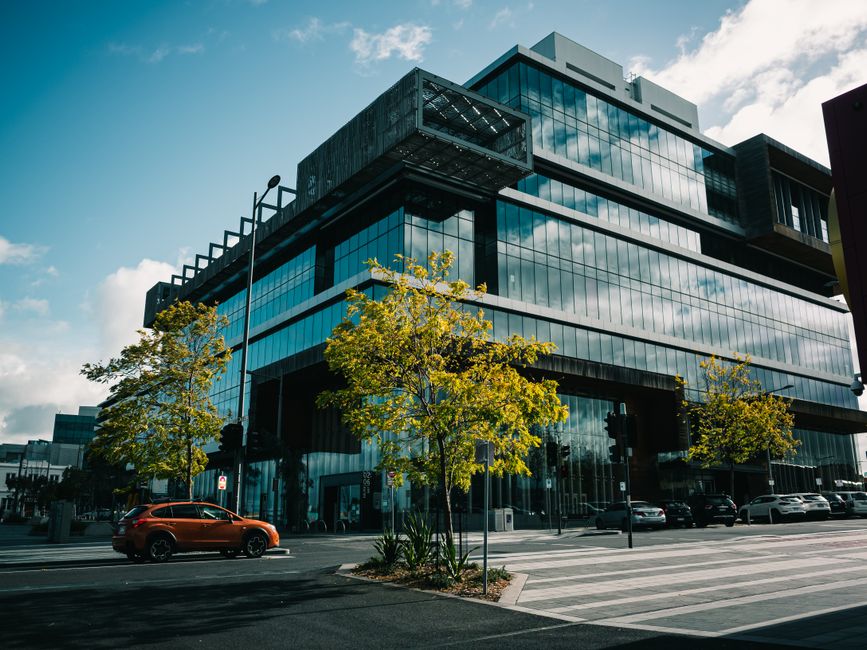
The crucial indicator nobody's watching closely enough? Commercial office vacancy rates. In Adelaide's CBD, particularly around Grenfell Street and North Terrace, vacancy sits above 10 per cent. When landlords struggle to fill space, it signals that businesses aren't expanding or are consolidating operations—both negative indicators for future hiring, even if present employment figures look stable.
International investment flows deserve particular scrutiny. Chinese and Southeast Asian investors, once reliable buyers of Adelaide real estate and small businesses, have become more cautious. This cooling hasn't devastated our market, but it has slowed capital velocity.
For job seekers and business owners, the lesson is clear: Adelaide's economic indicators suggest we're in a holding pattern. Employment remains resilient, but genuine investment growth requires renewed confidence. Watch the office market, the startup funding pipeline, and interstate migration patterns. When those shift, Adelaide's job market will follow.
This article was compiled by AI from the sources linked above and screened before publishing. See our editorial standards.
Spread the word
About this article
Published by The Daily Adelaide
Your take
Daily brief
Free, in your inbox before 7am. Weekdays.
More from Adelaide