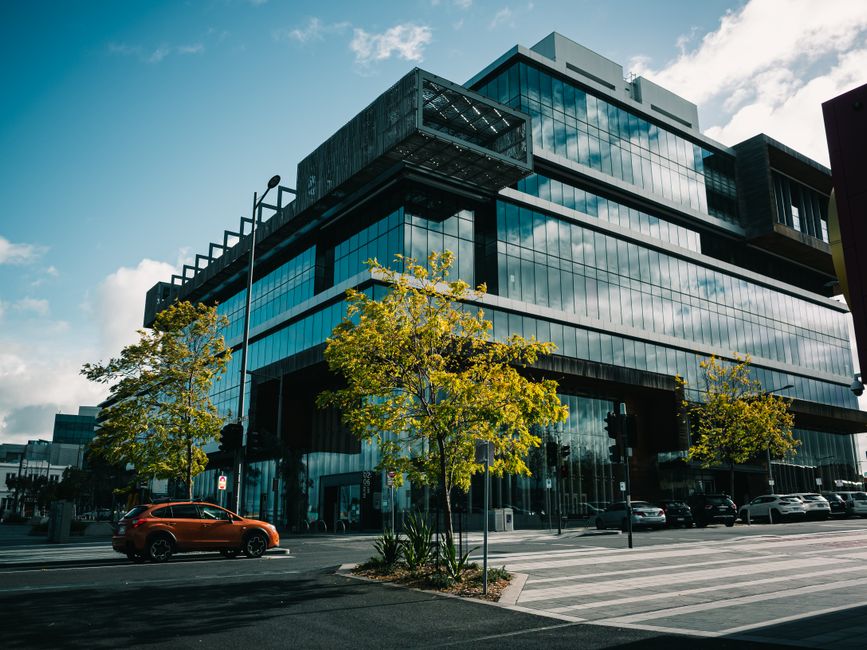
As tech hubs cluster around Wauwi and the Adelaide Botanic Gardens precinct, the city's job market is undergoing a fundamental shift—luring young professionals away from Melbourne and Sydney.
Adelaide's startup ecosystem has undergone a dramatic transformation over the past 18 months, fundamentally altering how the city attracts, retains and develops talent. The emergence of dedicated innovation districts—particularly around the Wauwi precinct near the Adelaide Showgrounds and the expanding tech corridor along Wauwi Street—has created a magnetic pull for early-career professionals and established specialists alike.
Data from the South Australian Government's Innovation and Technology Division shows that venture capital investment in local startups reached $187 million in 2025, nearly triple the figure from three years prior. More significantly, employment in South Australia's tech and innovation sectors grew 22 per cent year-on-year, outpacing traditional industries like manufacturing and professional services.
The shift is reshaping Adelaide's labour market in tangible ways. Premium office space in emerging innovation precincts now commands $380–$420 per square metre annually, up from $260–$290 in 2023. Meanwhile, salaries for software developers, product managers and data scientists have climbed 15–18 per cent, reflecting fierce competition among startups and established tech companies for scarce skilled talent.
Perhaps more revealing is the demographic movement. Migration data indicates that Adelaide's net interstate migration in the tech and professional services category has swung positive for the first time in a decade—younger professionals aged 25–35 are now moving to Adelaide rather than away from it, attracted by lower cost of living, quality of life and genuine career momentum in the startup space.
Traditional employment sectors are feeling the pressure. Financial services and insurance recruitment agencies report heightened competition when hiring mid-level professionals, with candidates increasingly lured to startup roles offering equity upside and closer involvement in product decisions. Several established law firms and accounting practices have responded by restructuring their graduate development programs and expanding remote work options.
The cultural impact extends beyond salaries and relocation patterns. Venues like The Spot on Wauwi Street and co-working spaces throughout the Adelaide CBD have become informal talent networks, where entrepreneurs, investors and job-seekers converge. Local universities—particularly the University of Adelaide and Flinders University—have strengthened partnerships with startups, placing more graduates directly into innovation roles rather than traditional corporate pipelines.
However, challenges remain. Housing affordability, while superior to Sydney and Melbourne, has begun creeping upward in suburbs adjacent to innovation precincts. Retention of top talent beyond the initial three-to-five-year startup cycle remains uncertain, as mid-career professionals sometimes seek the scale and stability of larger eastern-seaboard firms. Still, Adelaide's startup ecosystem has fundamentally altered the city's value proposition to ambitious talent—and the job market is shifting accordingly.
This article was compiled by AI from the sources linked above and screened before publishing. See our editorial standards.