AI Datacentres and Green Tech Are Rewriting Adelaide's Hiring Rulebook
A surge in infrastructure investment is pulling skilled workers toward new industries — and leaving traditional employers scrambling for talent.
A surge in infrastructure investment is pulling skilled workers toward new industries — and leaving traditional employers scrambling for talent.
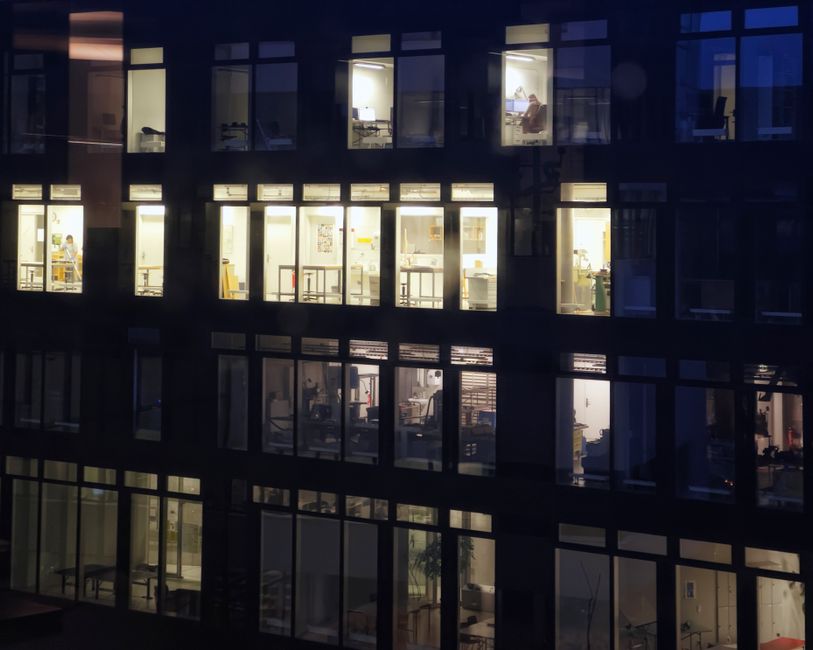
Adelaide's job market is splitting in two. On one side, a cluster of high-growth sectors — artificial intelligence infrastructure, defence technology, and circular economy businesses — is absorbing workers at a pace the city's training pipelines weren't built to handle. On the other, established industries from retail to hospitality are watching experienced staff walk toward better pay and more stable conditions elsewhere. The divergence is sharpening fast in the first half of 2026.
The timing matters because several forces converged at once. Nationally, the race to build AI datacentres has intensified competition for industrial land and specialist labour, pushing infrastructure projects into secondary cities like Adelaide where land costs are lower and state government incentives are available. Simultaneously, South Australia's Container Deposit Scheme and the broader push toward waste-to-resource operations have created a new category of green-collar work that simply didn't exist five years ago. Workers and employers alike are recalibrating.
The pressure is most visible in two distinct Adelaide corridors. Along the Edinburgh Parks precinct north of the city, defence and technology contractors have been expanding headcount since late 2025, driven partly by AUKUS commitments and partly by federal data sovereignty requirements that demand locally hosted infrastructure. The Australian Industry Group's South Australia division reported in May 2026 that engineering and cybersecurity vacancies in the northern suburbs had risen 34 percent year-on-year, with median advertised salaries for mid-level systems engineers now sitting above $115,000.
South of the CBD, the Tonsley Innovation District on South Road is seeing a different but related dynamic. Manufacturers and circular economy start-ups at Tonsley — including businesses processing organic waste streams into compost and agricultural inputs — are competing for the same pool of logistics coordinators, plant operators, and environmental compliance officers that the datacentre builders want for facilities management roles. Flinders University's New Venture Institute, which operates on the Tonsley campus, has flagged the mismatch in internal planning documents circulated to industry partners this quarter, noting that graduate placement timelines are stretching from the usual six weeks to closer to three months as employers queue for the same candidates.
The hospitality and food-service sector is feeling the squeeze differently. Restaurants and café strips along Gouger Street and Rundle Street East are reporting that experienced kitchen and front-of-house staff are being lured into logistics and warehousing roles attached to the new infrastructure projects, where rostered hours are more predictable and penalty-rate structures more generous. The Restaurant and Catering Industry Association of South Australia noted earlier this year that member businesses in the CBD faced an average of 2.3 unfilled positions per venue through the March quarter of 2026.
TAFE SA is the most immediate pressure point. The institution enrolled roughly 4,200 students in construction and engineering trades in 2025, but industry bodies argue that number needs to grow by at least 20 percent annually to meet projected demand through 2028, when several large datacentre and defence facility builds are scheduled for completion. The state government's Skills Roadmap, released in March 2026, committed $47 million over three years to expand micro-credential programs, specifically targeting workers looking to move laterally from sectors like retail or tourism into technical roles.
Those micro-credentials are the practical option for workers who can't afford to pause income for a full qualification. A 12-week electrical fundamentals short course at TAFE SA's Regency Park campus, for instance, now carries a $1,200 fee after government subsidy — down from $3,400 two years ago. Enrolments in that specific program doubled between January and June 2026.
Employers recruiting right now are being advised by consultancies including the South Australian-based firm Peoplecorp to broaden their geographic sourcing, particularly toward interstate graduates, and to offer relocation assistance packages — something previously rare outside the resources sector. Workers with transferable skills in project coordination, data analysis, or environmental compliance are well-positioned to negotiate, and several recruitment agencies on King William Street are reporting that candidate salary expectations in those categories have risen 12 to 18 percent since January. Adelaide's labour market hasn't felt this directionally decisive in years.
Partner Content
PromotedTell your story in long form alongside trusted local journalism. Native placements run for seven days across the homepage and a dedicated article URL, with a clear “Promoted” label and full editorial production support.
Enquire about partner contentSpread the word
About this article
Published by The Daily Adelaide
Your take
Daily brief
Free, in your inbox before 7am. Weekdays.
More from Adelaide


