Adelaide's Office Shake-Up Is Redrawing the City's Talent Map
A structural shift in commercial property demand is forcing employers across Adelaide to rethink where they locate — and who they can attract.
A structural shift in commercial property demand is forcing employers across Adelaide to rethink where they locate — and who they can attract.
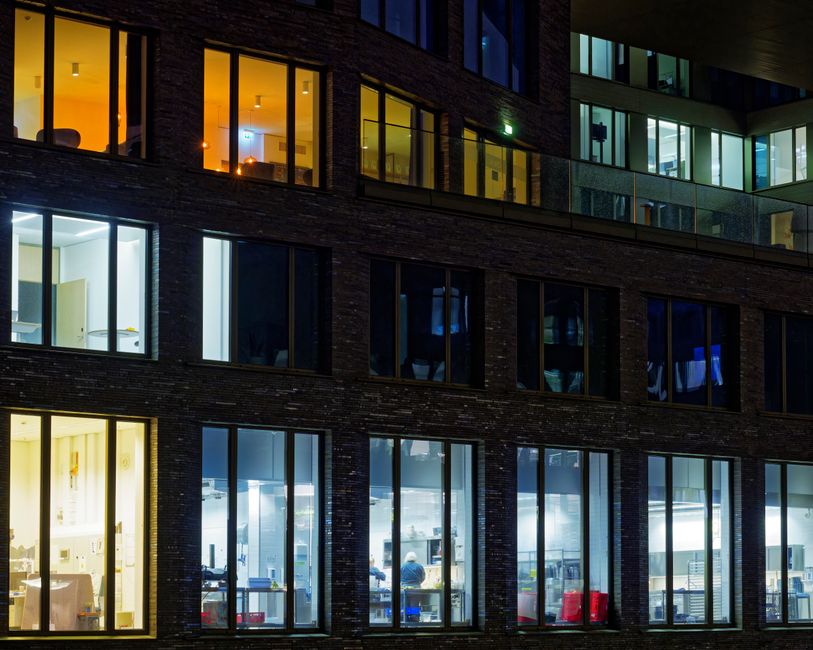
Vacancy rates in Adelaide's CBD office market have held stubbornly above 16 percent for the past 18 months, yet rents for premium-grade space on King William Street have climbed nearly 8 percent since January 2025. That gap — cheap secondary stock sitting empty while tenants compete hard for quality — is quietly reshaping which businesses can afford to be where, and what that means for the workers they're trying to hire.
The timing matters. Nationally, AI data centre demand is already squeezing industrial land supply, pushing freight and logistics operators into suburban corridors. In Adelaide, that pressure is landing alongside a residential market that has finally started to cool, giving landlords and employers a narrower margin for error when making location decisions. The office market is no longer just a real estate story. It's a talent strategy question.
The clearest sign of the shift is what's happening at either end of the city. Towers in the Lot Fourteen precinct on North Terrace — the innovation district anchored by the Australian Space Agency and Stone & Chalk — are running close to full occupancy. Meanwhile, older B and C-grade buildings along Grenfell Street and parts of Currie Street are offering effective rents well below $400 per square metre annually and still struggling to fill floors.
For workers, that divergence has real consequences. Companies that choose premium addresses near Lot Fourteen or the new Bespoke precinct at 83 Pirie Street gain a recruiting edge — particularly for younger tech and professional services workers who treat workspace quality as a proxy for employer seriousness. Property consultants tracking Adelaide's CBD say firms that downgraded to cheaper stock during the post-pandemic cost squeeze are now reporting higher staff turnover and more difficulty closing offers with interstate candidates.
The Defence SA cluster in the city's south-west, anchored by contracts flowing through the AUKUS program, is adding another layer. Defence and advanced manufacturing firms — many operating out of Osborne in the north and with administrative offices downtown — are leasing more space in the western fringe of the CBD, around Franklin Street and Wright Street, rather than paying the premium commanded closer to Rundle Mall. That's creating a loose corridor of mid-market tenancy that could become a genuine alternative employment hub if enough anchor tenants commit.
Adelaide-based recruitment firms working in professional services and technology sectors say office location now comes up explicitly in roughly one in three candidate conversations — a figure that was close to negligible before 2023. Candidates are not simply asking about work-from-home flexibility; they are asking about public transport access, end-of-trip facilities, and proximity to amenities. The Adelaide Central Market precinct and Rundle Mall remain the benchmarks most candidates cite when evaluating CBD roles.
The Property Council of Australia's most recent Office Market Report, covering the six months to January 2026, put Adelaide's total CBD office stock at approximately 1.05 million square metres, with the sub-500-square-metre suite market showing the tightest conditions — vacancy below 9 percent — as small professional services firms and startups continue to absorb boutique space faster than it comes to market.
Employers holding leases due for renewal in the next 12 months face a genuine decision point. Staying put in a declining building saves money on face rents but may cost more in recruitment and retention. Moving to premium space raises the occupancy bill but signals something to prospective hires that a job listing cannot. Several mid-sized Adelaide law and engineering firms are understood to be weighing exactly that trade-off ahead of lease expiries in late 2026 and early 2027.
Businesses that move first — locking in longer-term leases at current incentive levels before vacancy in premium stock tightens further — are likely to carry an advantage in talent attraction for the next two to three years. Those that delay may find both the space and the workers they want have already been claimed by someone else.
Partner Content
PromotedTell your story in long form alongside trusted local journalism. Native placements run for seven days across the homepage and a dedicated article URL, with a clear “Promoted” label and full editorial production support.
Enquire about partner contentSpread the word
About this article
Published by The Daily Adelaide
Your take
Daily brief
Free, in your inbox before 7am. Weekdays.
More from Adelaide


