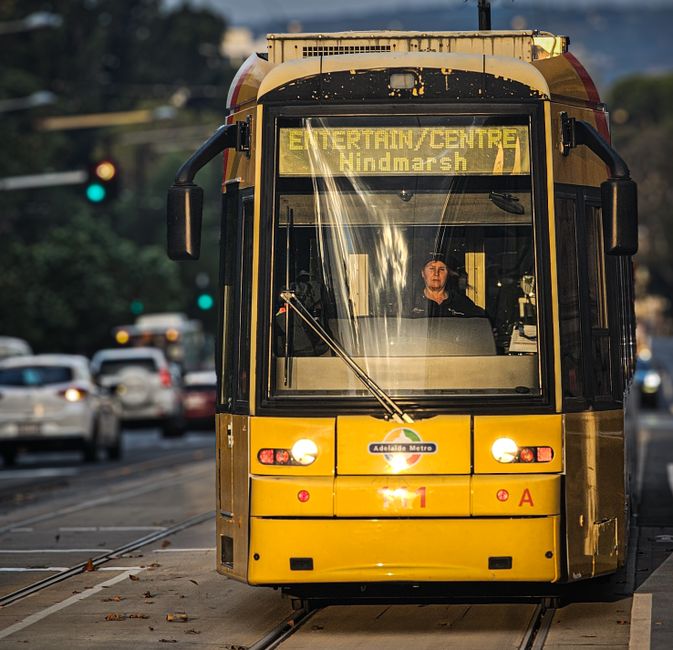
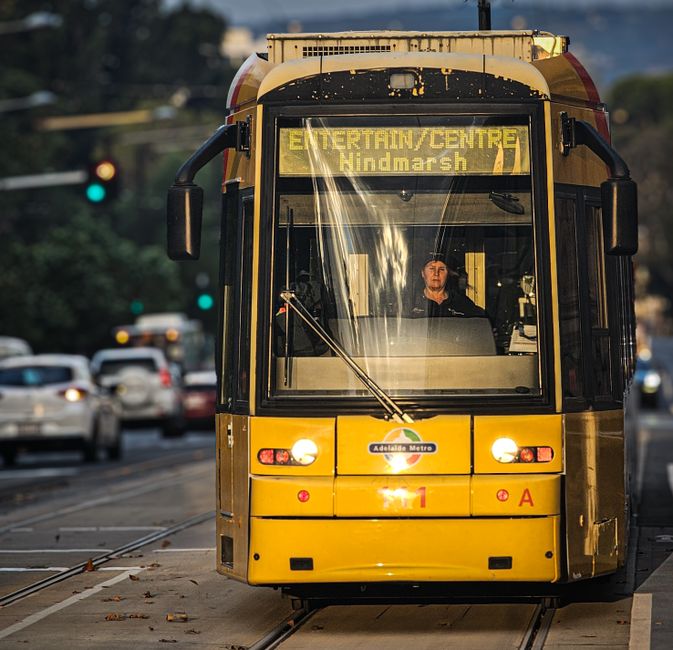
As major infrastructure projects reshape the city, experts say Adelaide's approach to planning and delivery offers lessons—and warnings—for comparable global centres.
Adelaide's ambitious transport infrastructure pipeline—anchored by the $18.2 billion North-South Motorway extension and the $1.5 billion O-Bahn modernisation—is reshaping how the city moves. But as cranes dot the skyline from Gawler to Seaford, the question preoccupying planners and residents alike is whether South Australia's execution matches that of comparable global peers.
The North-South Motorway project, Australia's largest current infrastructure undertaking outside of Sydney and Melbourne, aims to reduce congestion on critical commuter corridors. Yet Adelaide's timeline—completion pencilled in for 2035—appears sluggish compared to equivalent projects abroad. Toronto's $17 billion Eglinton Crosstown LRT, despite significant delays, is substantially operational by 2026. Similarly, Copenhagen's Metro expansion, delivering comparable scale benefits, moved through planning and delivery in tighter timeframes.
Transport specialists suggest Adelaide's comparative advantage lies elsewhere. The city's decentralised population—with employment hubs scattered across Norwood, Kent Town, and the CBD—means infrastructure can be staged more flexibly than in denser global cities. "Adelaide doesn't need the all-or-nothing approach that gridlocked Toronto or London faces," notes urban planning research from the University of South Australia.
Cost efficiency tells another story. Adelaide's per-kilometre infrastructure costs run 15-20 per cent below comparable Australian projects, and significantly lower than international benchmarks. The O-Bahn upgrade—a $1.5 billion investment serving the Glenelg and Noarlunga lines—demonstrates how retrofitting existing systems can outpace greenfield alternatives pursued by cities like Perth and Brisbane.
Yet challenges persist. Community consultation processes, while more robust than in comparable cities, have extended project timelines. The South Road Superway modifications, initially planned for 2024 completion, now stretch toward 2027. European cities—particularly those in the Netherlands and Scandinavia—compress these phases through earlier stakeholder engagement.
Integration between transport modes remains an ongoing tension. While the Adelaide Metro network theoretically connects bus and rail services, real-time coordination and unified ticketing lag behind integrated systems in Helsinki, Stockholm, and Melbourne. The Council's multi-modal vision for Rundle Mall and Hindmarsh Square represents progress, but implementation across the broader network remains fragmented.
Sustainability metrics favour Adelaide's approach. The shift toward electric bus fleets and rail electrification—with 74 per cent of Adelaide Metro vehicles now zero-emissions capable—outpaces several comparable Western cities still reliant on diesel-hybrid systems.
As projects advance through the 2030s, Adelaide's real test will be delivery consistency. Cities succeed not through ambition alone, but through sustained execution. On that measure, the verdict remains in progress.
This article was compiled by AI from the sources linked above and screened before publishing. See our editorial standards.