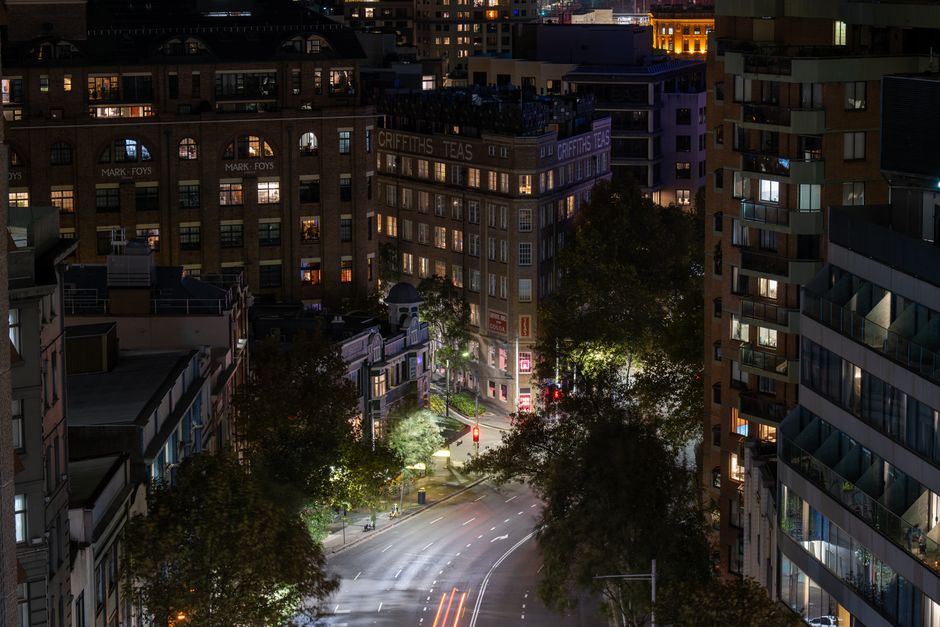
With South Australia recording its fastest population growth in two decades, multicultural leaders and policy experts are warning that settlement services are being stretched beyond their design.
South Australia's overseas migration intake hit a record 38,400 people in the 2024–25 financial year, according to figures released last month by the Australian Bureau of Statistics — and Adelaide's existing settlement infrastructure, built for a significantly smaller annual intake, is straining to keep up. Community organisations, urban planners and state government officials are now debating publicly how the city absorbs that growth without fracturing the support networks that make successful integration possible.
The timing matters. Sydney's brutal June heat and the political turbulence rattling NSW Labor have pushed both housing pressure and cost-of-living stress onto the national agenda. Adelaide has so far absorbed interstate arrivals and skilled migrants more quietly, but the Malinauskas government's own hydrogen jobs plan and the expanding AUKUS submarine program at Osborne Naval Shipyard are actively recruiting skilled workers from overseas — India, the Philippines, and Germany among the primary source countries according to Defence SA briefings from May. That pipeline does not slow down once someone lands at Adelaide Airport.
Settlement Organisations Flag a Capacity Gap
The Multicultural Communities Council of SA, based on Grote Street in the CBD, has been the most direct. At a public forum at the Migration Museum on Kintore Avenue in late June, council representatives told attendees that demand for its emergency housing referral service had grown by 31 percent in the twelve months to May 2026. New arrivals — particularly those coming on employer-sponsored visas tied to defence and manufacturing roles at Osborne and Edinburgh Parks — are discovering that affordable rental vacancies in the northern and western suburbs have effectively vanished. The median weekly rent for a three-bedroom house in Salisbury, one of Adelaide's traditional migrant settlement corridors, now sits above $490, compared with $380 two years ago.
Settlement Services International, which operates a dedicated Adelaide office and runs the federal government's Humanitarian Settlement Program in SA, confirmed to The Daily Adelaide this week that it has placed a formal request to the Department of Home Affairs for additional case worker funding under the 2026–27 federal budget cycle. The organisation currently employs 47 staff across South Australia, a number advocates describe as inadequate for the current caseload.
Researchers at the University of South Australia's Australian Centre for Housing Research released a working paper in June arguing that Adelaide needs a dedicated multicultural housing strategy — something several European cities with comparable migration-to-population ratios adopted in the 2010s. The paper pointed to Davoren Park and Parafield Gardens as neighbourhoods where new arrivals are concentrating due to lower land costs, but where access to English-language classes and public transport remained well below the metropolitan average.
State Government Points to Lot Fourteen and Skills Matching
The Malinauskas government's position, articulated by the Office for Refugees and Migrants in a written statement this week, is that South Australia remains better placed than Sydney or Melbourne to absorb migration because of its comparatively lower density and the structured employment pathways built around Lot Fourteen and the Osborne precinct. The state's Skilled Migrant Employment Reactivation program, which since its 2023 launch has helped more than 2,200 internationally qualified professionals gain local accreditation, is cited as evidence the government is getting ahead of the settlement curve.
Critics, including the Refugee Council of Australia's SA representative, say skilled-visa infrastructure and humanitarian settlement are two separate problems that the government keeps conflating. People arriving on humanitarian grounds — approximately 4,100 in SA last financial year — need interpreting services, trauma-informed housing support and school placement help that a tech-precinct jobs program does not provide.
For newly arrived families, the practical next step is registration with Settlement Services International or the Multicultural Communities Council of SA, both of which offer walk-in intake appointments. The MCSA on Grote Street runs Tuesday and Thursday morning sessions without prior booking. Anyone seeking housing assistance is advised to contact Housing SA's multilingual services line before signing a private lease, given the current rental market offers little room for renegotiation once a contract is signed.
Partner Content
Promoted
Brought to you by an Adelaide partner
Reach engaged Adelaide readers with sponsored stories
Tell your story in long form alongside trusted local journalism. Native placements run for seven days across the homepage and a dedicated article URL, with a clear “Promoted” label and full editorial production support.