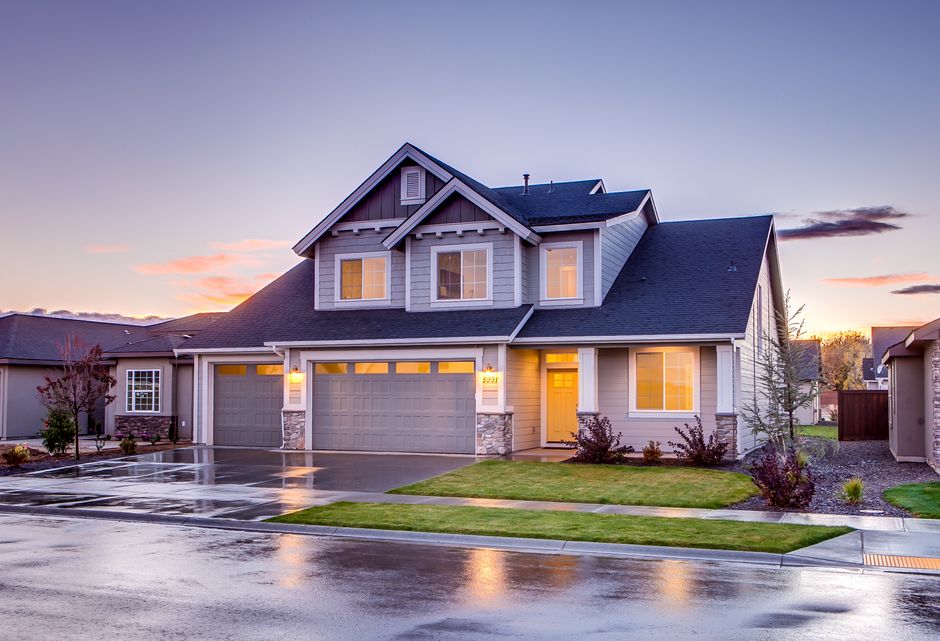
Prospect's median house price hit $985,000 in the June 2026 quarter, according to figures compiled by the Real Estate Institute of South Australia — a number that sounds steep until you stack it against Norwood's $1.31 million or Unley's $1.28 million for broadly similar 1920s character stock sitting roughly the same distance from the CBD. The gap, somewhere between $300,000 and $325,000 depending on the street, is the story.
That discount matters right now because Adelaide's broader market is doing something the eastern capitals are not. While downsizers in Melbourne's outer rings are sitting on stale listings and Queensland buyers are absorbing stamp duty hits that can run past $50,000 on a single transaction, South Australia's state median of around $720,000 — still the most affordable of any capital city — is drawing interstate migration at a rate the Department for Housing and Urban Development flagged in its April 2026 population bulletin as the strongest since 2003. New arrivals tend to anchor in the inner suburbs first. Prospect keeps coming up.
What Buyers Are Actually Getting
Prospect Road itself tells the story of a suburb mid-transformation. The strip between Regency Road and Gladstone Road now has three specialty coffee roasters, a Lebanese grocer that's been trading since 1987, and a string of architect-renovated semis listed in the $950,000 to $1.1 million range. Council data from the City of Prospect shows 214 development applications lodged in the 12 months to May 2026 — a 17 per cent jump on the prior year. Most are rear-lane additions and secondary dwellings, the bread-and-butter of a suburb densifying without losing its street-front integrity.
Two specific pockets stand out for buyers doing serious research. Homes on Gurney Crescent and the streets running east off Fitzroy Terrace have been selling between $920,000 and $1.05 million for three-bedroom sandstone cottages with original Baltic pine floors and 350-plus square metre allotments. Those same specs in neighbouring Nailsworth — which shares virtually identical heritage character — have been clearing $1.07 million to $1.15 million. The Prospect Council boundary is the only meaningful difference.
First-home buyers are a factor too. South Australia's HomeSeeker SA program, administered through Renewal SA, lists several affordable housing lots within the Prospect local government area, and the federal Help to Buy shared equity scheme — which began accepting applications in February 2026 — has a property price cap of $900,000 for South Australia. That ceiling fits a meaningful slice of Prospect's entry-level market, creating a second tier of demand below the trade-up buyer cohort.
The Numbers That Should Focus Minds
CoreLogic's June 2026 monthly chart card recorded Prospect's 12-month capital growth at 9.4 per cent, ahead of the Adelaide metropolitan average of 7.1 per cent but still below the 11.2 per cent recorded in Norwood over the same period. The yield story is also credible: a tidy three-bedder on Hayward Avenue rented in May 2026 at $680 per week, which on a $1 million purchase price pencils out at a gross yield of 3.5 per cent — lean by national standards, but in line with what quality inner-Adelaide product has traditionally returned before capital growth does the heavy lifting.
Days on market averaged 19 in June, down from 27 in June 2025. Auction clearance rates for the suburb sat at 74 per cent across the last four Saturday sessions tracked by the REISA. Stock is thin. The 47 active listings recorded on July 1 compare with 71 at the same point last year.
Buyers working with a buyers' agent or doing their own research should target the blocks between Prospect Road and Farrow Road as the core value zone. Get pre-approval sorted, get to open homes early, and don't assume the June quarter data represents the ceiling. The last suburb in Adelaide that traded at a comparable discount to its neighbours — Goodwood, circa 2019 — closed that gap inside 30 months.